OpenAI chief scientist Jakub Pachocki wants AI limits tied to perplexity
OpenAI's Jakub Pachocki asks labs to agree limits they won't cross until AI can be monitored, warning of a 2027 leap. Sam Altman backs it. What it means.
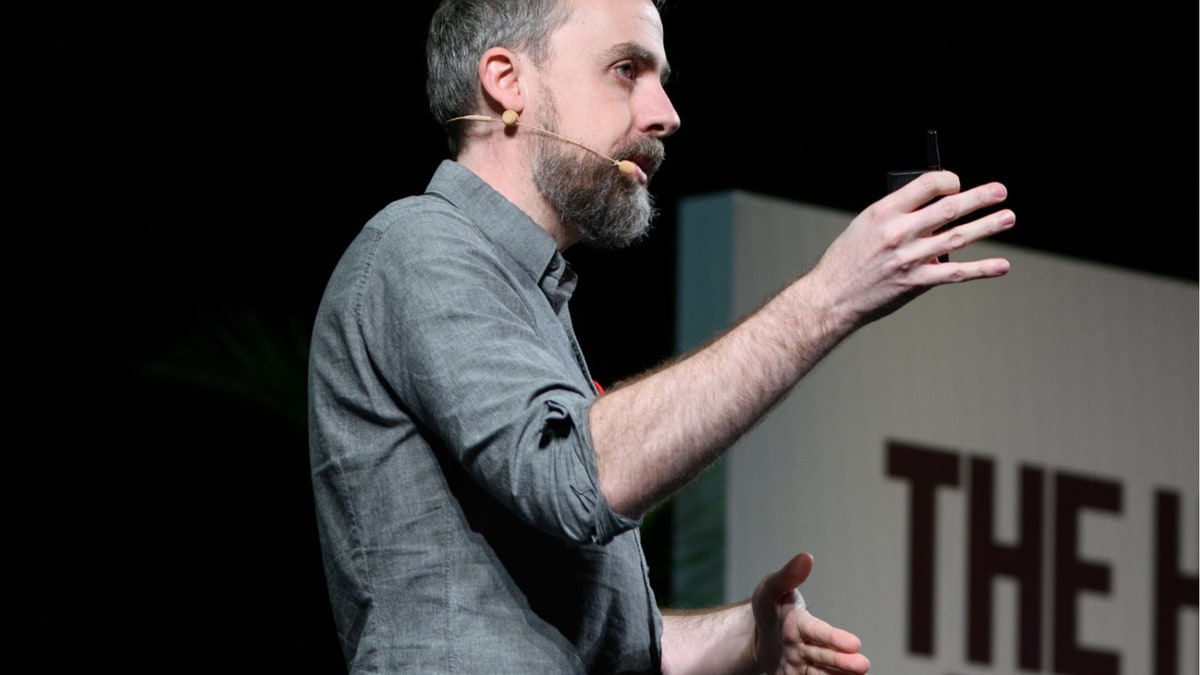
OpenAI’s chief scientist, Jakub Pachocki, has asked the whole AI industry to agree on limits for how powerful models can get, and to hold off crossing them until there are better ways to watch what those models are doing. He made the case in an essay titled “Perplexity and Intelligence”, published on OpenAI’s website on Sunday, 22 November, and Sam Altman backed it the same day on X, calling it “the most important thing OpenAI has published in awhile”, Reuters reported.
It is unusual for a frontier lab to propose brakes on itself and its rivals in public, and the essay also gives away something labs usually keep secret: OpenAI’s own internal progress numbers.
What is OpenAI’s chief scientist proposing?
Pachocki wants frontier developers to share evaluation norms, red-team safety cases and transparency standards, and then go further: agree on “common limits”, based on perplexity and other measures, that each lab commits not to cross until a concrete monitoring milestone is reached. He gives an example of such a milestone: a successor to today’s chain-of-thought monitors, the tools that read a model’s step-by-step reasoning to catch bad behaviour. He also suggests a system for setting new limits one after another as safety tools improve.
The essay does not say what the first limit should be.
What is perplexity, in plain words?
Perplexity measures how well a model guesses the next piece of text in material it has not seen. Lower means better guesses. Pachocki argues that this basic “prediction” skill, built in pretraining, drives most of the gains people later see in chatbots, and that it is a steadier yardstick than benchmarks, which models max out quickly.
OpenAI published its internal scores on a private codebase test set. By its figures, GPT-3.5, the model behind the first ChatGPT, scored about 0.99 (log-perplexity), and GPT-4 about 0.91. Pachocki writes that below 0.8 the company saw transformative abilities appear in cybersecurity and maths, that a model around 0.76 began producing notable maths results, and that he expects more transformative abilities somewhere around 0.68 to 0.7. “I don’t know what those capabilities will be, and we may not be testing for them today,” he wrote.
Why now: the 2027 warning
The reason for urgency is speed. Pachocki writes that “as soon as 2027” there could be a burst of fundamental training advances, partly because AI is starting to help with AI research itself. If that happens, model power could race ahead of the tools to monitor it. He notes that progress already sped up sharply in 2026, mostly from long-term research and computing investment.
He is open about the weak spots. Labs test on different data, so their numbers are hard to compare. “Perplexity does not directly correspond to a task we care about,” he admits, and it misses gains that come after pretraining, such as reasoning training.
Our take
This is a serious idea with a serious catch. A shared number is easier to police than vague promises, and publishing OpenAI’s own scores is a real step towards transparency. But the limits would be voluntary, nobody has set the first one, and rival labs, Chinese labs included, have said nothing yet. Without them, a limit only one company keeps changes little. There is also a business angle worth watching: rules written by today’s leaders can end up favouring today’s leaders.
For Pakistan, the 2027 warning is the part to take seriously. If AI tools jump in coding and cybersecurity ability within a year or two, the freelancers and software houses behind Pakistan’s IT exports will feel it first, both as better tools and as tougher competition. Students choosing courses now should lean towards skills that use these tools rather than compete with them.
What to watch next: whether Anthropic, Google DeepMind or xAI publish their own perplexity figures, and whether any government picks up the idea of agreed limits.