Why does criticism hurt so much? Dr. K on ADHD and rejection sensitivity
Psychiatrist Dr. Alok Kanojia says small criticism can feel crushing in ADHD because of emotional dysregulation. What he covers, and what the research says.
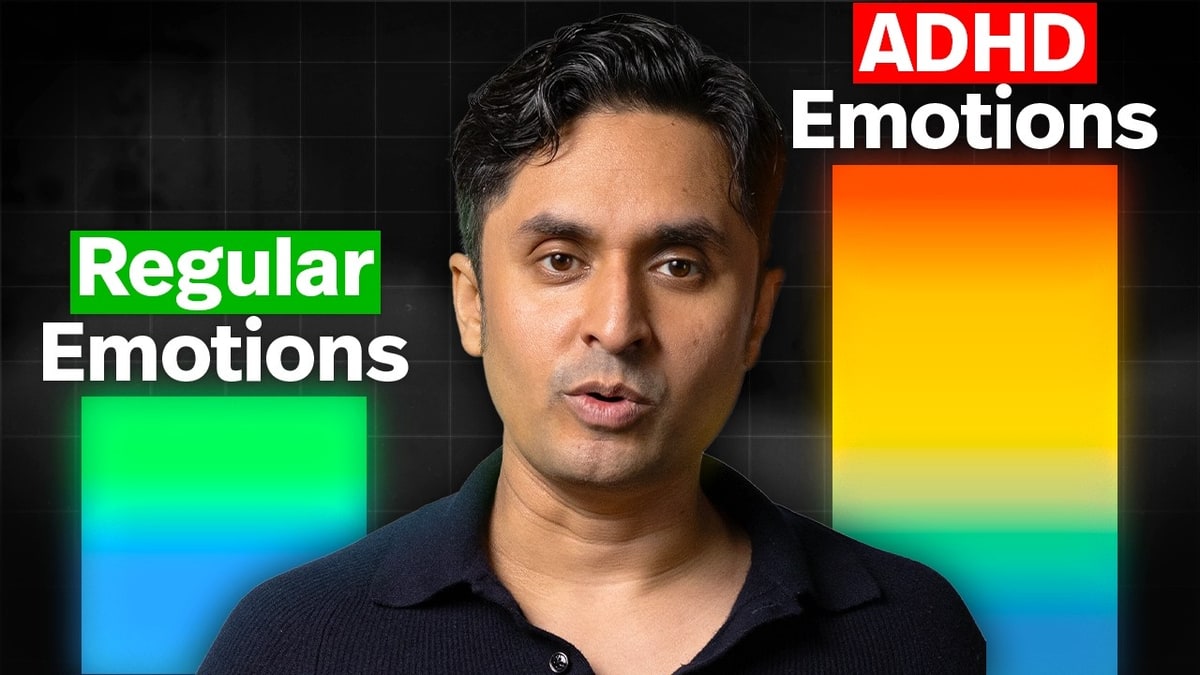

If a small comment from your boss or a relative can ruin your whole day, psychiatrist Dr. Alok Kanojia (Dr. K of HealthyGamerGG) says the reason may be part of ADHD that treatment often misses: emotional dysregulation and what is popularly called rejection sensitive dysphoria. He covers it in a new 22-minute video, “Why Every Little Criticism Destroys You”, posted on Friday, 21 November.
The clip above plays only the part on criticism and rejection (1:45 to 11:44). The full video links from the player.
The short version
- Dr. K’s starting point: ADHD medicine helps attention, but it does not fix everything, and some of what it leaves behind is emotional.
- He describes heightened emotional lability: feelings that rise fast, hit hard and take longer to settle.
- He looks at how people with ADHD respond to positive and negative stimuli, which is where criticism comes in.
- He then talks through ways to treat and manage rejection sensitivity.
- Later in the video he moves to two other things the usual picture misses: body-clock (circadian rhythm) problems and sluggish cognitive tempo, now often called cognitive disengagement syndrome.
What Dr. K covers
Dr. K, a US psychiatrist who co-founded the Healthy Gamer platform, frames the video around a common complaint: “I am on treatment, so why do I still struggle?” His answer is that ADHD has dimensions beyond focus, and the first one he names is emotional.
In the clip, he moves from emotional dysregulation and rejection sensitivity to emotional lability (how quickly moods swing), then to how positive and negative feedback land differently, and finally to treatment for rejection sensitivity. The video’s own summary says he also shares techniques that “can actually start making a difference”.
The second half covers the body clock, how to treat circadian problems, and cognitive disengagement syndrome, where a person feels foggy and slow, and why, in his words, stimulants cannot always help with that. He ends on behavioural activation, a well-known therapy method of scheduling small, doable actions to rebuild momentum.
Our take
The feeling Dr. K describes is real and widely reported, but the label needs care. Rejection sensitive dysphoria is not a formal diagnosis in the DSM-5-TR, the manual psychiatrists use, and it is not an official ADHD symptom. Research does link ADHD with stronger rejection sensitivity and emotional dysregulation, but much of it is small and recent, and nobody has properly tested which medicines help with it.
So use the idea as a way to understand yourself, not as a self-diagnosis. In Pakistan, where ADHD in adults is rarely diagnosed and a lot of criticism comes from family, exam results and the workplace all at once, simply knowing that some brains react harder to criticism can take away a layer of shame.
Who should be careful: anyone who thinks they have ADHD should see a psychiatrist rather than adjust any medicine or supplement on their own. This is information, not medical advice.
Try this today
- When a comment stings, name it: “this is a big reaction to a small thing”. Naming a feeling often lowers its heat.
- Wait before you reply to criticism by message. Give it an hour.
- Keep a fixed sleep and wake time this week; Dr. K links body-clock problems to ADHD struggles.
- Pick one tiny task and do it, the behavioural activation idea he ends on.
Other parts of the video
- 0:00 Introduction: why treatment does not fix everything
- 1:45 Emotional dysregulation and rejection sensitivity
- 2:45 Heightened emotional lability
- 5:14 Positive and negative stimuli
- 8:15 Treating rejection sensitivity
- 11:44 Circadian rhythm problems
- 14:31 Treating circadian rhythm problems
- 17:16 Cognitive disengagement syndrome
- 19:25 Behavioural activation