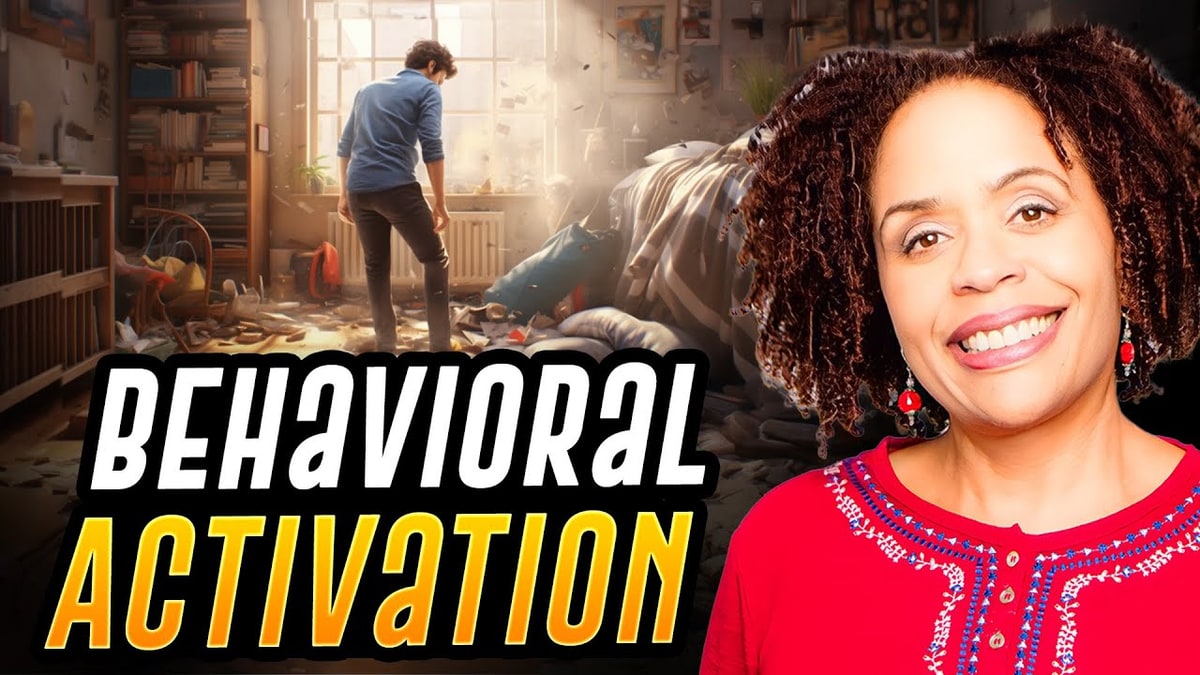
Why am I so tired after doing nothing? Psychiatrist Dr Tracey Marks on task switching
A day of small interruptions can drain you more than one big task. Psychiatrist Dr Tracey Marks' tips on task switching and decisions, and what research says.


If you finish a day where nothing much happened and still feel wiped out, the reason may be how often you stopped and restarted, not how much you did. That’s the idea running through a week of short videos from Dr Tracey Marks, a US psychiatrist who makes plain-language mental health videos for her YouTube channel.
The short version
- An “uneventful” day can still involve a lot of stopping, restarting and remembering where you left off. That is tiring in itself.
- Before you switch tasks, leave yourself a precise note on where to resume.
- If your mind keeps drifting back to an unfinished task, ask what exactly is worrying you about it.
- When you’re tired, don’t make big decisions just to end a discussion. Pause, and decide what can wait.
- Pick a set stopping point for breaks instead of waiting until everything is done.
What Dr Marks says
In the note posted with the clip above, Dr Marks writes that a quiet day can still be full of stopping and starting, and suggests you notice that pattern, not just count how many tasks you finished. The notes with her other videos this week are just as practical.
On switching tasks: leave a note that tells you exactly where to pick up. Her example: “Check the figures in section two” is more useful than “finish report” when you come back.
On a task that won’t leave your head: notice what concerns you about it. It might be a fear of forgetting a follow-up, or that you’re waiting on information you need. Naming it, and writing it down, can let your attention move on.
On decisions when you’re drained: if you catch yourself choosing whatever ends the discussion because you’re tired, pause before anything important. Ask what can wait, what needs another person’s input, and when you usually think most clearly.
On memory slips: holding several things in mind gets harder under stress, and notes and fewer simultaneous requests may help. But she adds an important caution: new or worsening memory problems shouldn’t automatically be written off as workload.
Our take: what the research supports
The core idea is well supported. In a 2001 study by psychologists Joshua Rubinstein, David Meyer and Jeffrey Evans, people lost time every time they switched between tasks, and the loss grew as tasks got more complex or unfamiliar. Business professor Sophie Leroy’s 2009 research named the leftover pull of an unfinished task “attention residue”: people found it hard to stop thinking about it, and their performance on the next task suffered.
“Decision fatigue” is shakier ground. Some well-known studies on it have not held up in later replications, so treat it as a useful prompt to slow down, not a fixed law of the brain. Dr Marks’ advice works either way, because it’s about pausing, not about a fuel tank running empty.
In Pakistan, the interruptions are often built into the day: a joint family where someone always needs something, WhatsApp groups that never sleep, load-shedding cutting a task in half, or a student switching between school, tuition and chores. You can’t remove all of that, but you can make each restart cheaper.
Try this today
- Before you stop any task, write one line on exactly what to do next.
- Turn off group-chat notifications for two hours while you study or work.
- Keep a “later” list for worries about unfinished tasks so they don’t nag you.
- Choose one fixed break time today and take it even if you’re not done.
This is general information, not medical advice. If forgetfulness or exhaustion is new, getting worse, or affecting daily life, talk to a doctor.
More short clips from Dr Marks this week
- “Leaving yourself a note before you switch tasks” (embedded below)
- “When you get tired of making decisions” (embedded below)
- “Losing track of what you were about to do” (embedded below)


Sources
- Dr. Tracey Marks on YouTube: Feeling exhausted after an uneventful day
- Dr. Tracey Marks on YouTube: Leaving yourself a note before you switch tasks
- Dr. Tracey Marks on YouTube: When you get tired of making decisions
- APA Monitor: Is multitasking more efficient? (Rubinstein, Meyer and Evans, 2001)
- Leroy (2009), Organizational Behavior and Human Decision Processes: Why is it so hard to do my work? The challenge of attention residue
This story was researched and drafted with AI assistance, then checked and edited by our editor before publishing.