Treasury bill auction: govt raises Rs587bn as yields fall up to 0.48%
The government borrowed Rs587bn against a Rs400bn target on 11 November, at lower rates on all four T-bills. What it means, and the Rs98.9tr debt figure.
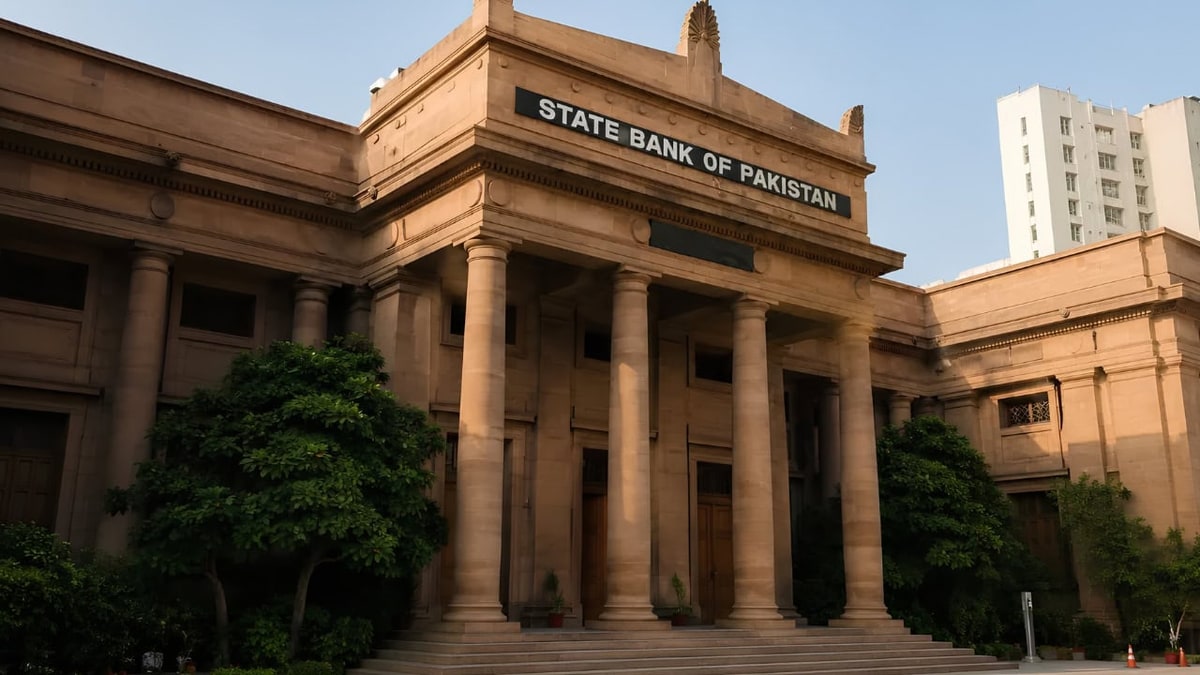
The federal government raised Rs586.7 billion in the State Bank of Pakistan’s treasury bill auction on Wednesday, 11 November, almost Rs187 billion more than its Rs400 billion target. It also paid less for the money: cut-off yields fell on all four bills, by between 0.22 and 0.48 percentage points, compared with the previous auction on 28 October.
How much did the government borrow, and at what rate?
According to auction results reported by Dawn and TechJuice, banks and other investors offered about Rs2.19 trillion, more than five times the target. The government took Rs232.5 billion through competitive bids and Rs354.3 billion through non-competitive bids, which usually come from provinces and other institutions. Rs435 billion of older T-bills were maturing that week, so the government borrowed more than it had to repay.
The new cut-off yields, with the 28 October auction in brackets:
- 1-month: 11.88% (12.11%)
- 3-month: 12.00% (12.43%)
- 6-month: 12.19% (12.65%)
- 12-month: 12.41% (12.89%)
Dawn reported that among competitive bids, the 12-month bill took the largest share, about Rs201 billion. Counting non-competitive money too, the 3-month bill took the most, Rs300.8 billion, according to Bloom Pakistan’s breakdown.
Why yields fell after a rate hike
The SBP raised its policy rate from 11.5% to 12% on 26 October, and the 28 October auction priced that in, with every yield going up. Two weeks later the market has calmed down. Petrol has been cut almost daily this month and fell to Rs330 a litre on 14 November, and weekly inflation eased to 11.21%. Banks bidding at lower rates suggests they do not expect another hike soon, though that is a reading of the market, not an SBP statement.
For ordinary savers this matters because T-bill yields are the benchmark behind money market fund returns and the profit banks offer on short-term deposits. Lower yields usually mean those returns slip a little.
Rs98.9 trillion or Rs82.7 trillion: which debt figure is right?
Both, because they measure different things. On Friday, 13 November, SBP data showed Pakistan’s total debt and liabilities at Rs98.881 trillion at the end of September 2026, up 6.46% from Rs92.879 trillion a year earlier, The Express Tribune reported. That is the whole country’s bill: government debt plus loans of public sector companies, private sector foreign loans, IMF borrowing and other liabilities.
The government’s own debt is smaller. In the same SBP data, gross government domestic debt was Rs57.758 trillion and government external debt Rs24.900 trillion. Added together that is about Rs82.66 trillion, which is the figure some reports have called public debt.
The cost is rising faster than the pile. Debt servicing in July to September reached Rs2.9 trillion, 33% more than a year earlier, according to the Tribune. Mohammed Awais Ashraf of AKD Securities told the paper that government debt grew to fund the fiscal deficit, but the debt-to-GDP ratio is improving.
What to watch next
The SBP holds T-bill auctions every two weeks, so the next result will show whether yields keep sliding. This story is information only, not investment advice.