AI agents found a zero-day in medical-scan software, Amazon says
Amazon says China-linked hackers' AI agents found an unknown flaw in MONAI Label and got root on a university server. What happened and what it means here.
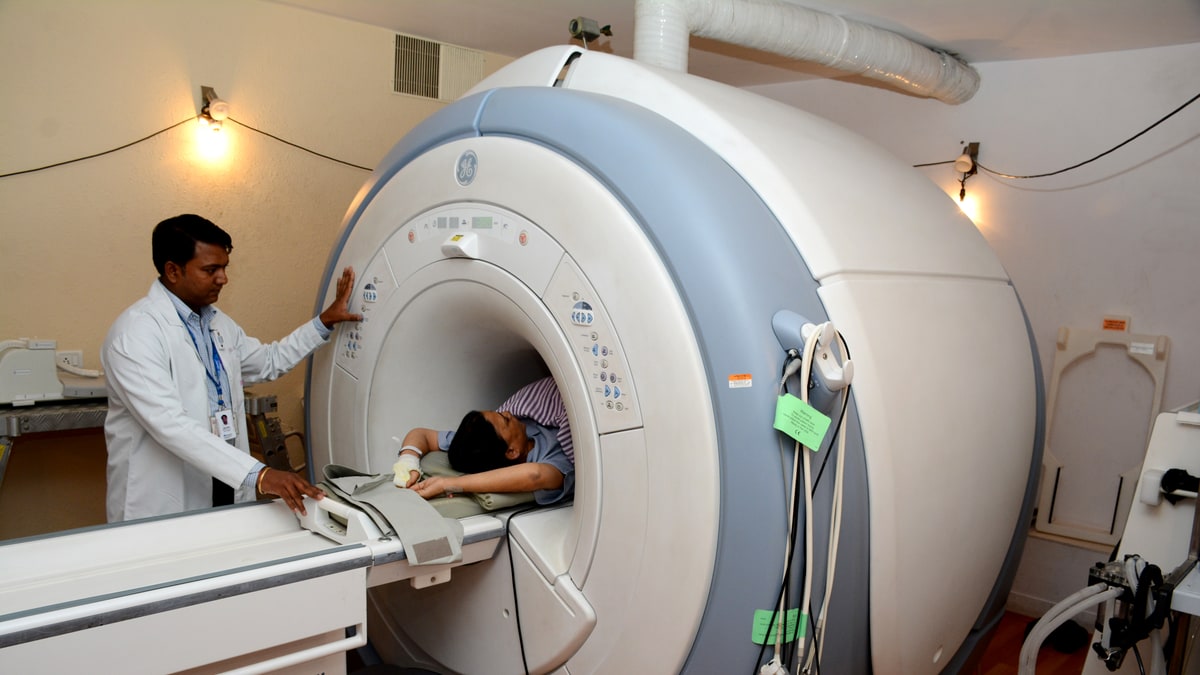
Amazon says a suspected China-linked hacker let a team of AI agents loose on university servers, and the agents found a brand-new flaw in medical-imaging software on their own, then used it to take full root control of one machine. The flaw sat in MONAI Label, an open-source tool researchers use to label medical scans and train imaging AI.
Amazon Threat Intelligence published the findings in an incident report on the AWS Security blog this week, and SecurityWeek and The Hacker News reported the details on Saturday, 21 November.
What did the AI agents actually do?
According to Amazon, the operator ran Cairn, an open-source framework that turns AI agents into automated penetration testers. The human gave the agents a list of targets and one goal: get shell access. The agents picked the methods themselves.
On one target, a server belonging to a university in East Asia outside mainland China, the agents spotted MONAI Label, mapped its interface and found a path traversal bug in the file upload feature. That kind of bug lets an attacker write a file anywhere on the disk instead of only inside the upload folder. Amazon said that in about 11 minutes the agents went from mapping the application to writing files on the server.
The root access came later, in a separate session. The agents planted a small Python file that runs whenever Python starts, then triggered the software’s model-training feature. That started a new Python process, which loaded the planted file and connected back to the attacker with root privileges, The Hacker News reported.
The operator then gave the agents a tunnel into a second university running the same software. Amazon believes that network was broken into the same way, but has not confirmed it.
How did Amazon see all this?
The attacker left their Cairn control panel on the open internet with no password. Amazon found it on 10 September and could read the prompts, the task settings and the agents’ output, which is how it rebuilt the intrusion step by step.
Amazon said it assesses “with high confidence” that the flaw was a zero-day, meaning no fix or public warning existed before the attack. The China link is rated only moderate confidence: the prompts were in Simplified Chinese, scripts used China Standard Time and the targets fit China’s interests. No named group or government role has been established.
Is the flaw fixed?
Partly. The MONAI Label maintainers confirmed the bug and merged a code fix on 19 October, and published a security advisory rated critical for version 0.8.5 and earlier. But SecurityWeek and The Hacker News both said the fix is due in the next release, so anyone installing the usual package still gets the vulnerable version. Authentication is switched off by default, which is why anyone who could reach the server could exploit it.
Nothing in the report shows that patient scans or hospital systems were touched. The targets were university research servers.
What it means for Pakistan
This is the part worth sitting with. Finding a fresh zero-day has usually needed skilled people and time. Here, by Amazon’s account, AI agents with a one-line goal did the hunting. That lowers the bar for attackers everywhere, including those who target Pakistani networks.
Pakistani universities and teaching hospitals increasingly run open-source research tools, often set up quickly by a PhD student or a small IT team, with default settings left on. This case shows exactly how that goes wrong: a research server open to the internet, no login, running as root.
For Pakistani IT firms and freelancers who do security testing for foreign clients, the same tools cut both ways. Cairn is a legitimate pentesting framework, and defenders can use agents to find holes first. Clients will start asking whether you do.
Pakistan’s National CERT already flagged this trend: in an advisory dated 5 November, it warned that AI, bots and agentic tools could help criminal groups broaden “the scale, speed and sophistication” of attacks, The Express Tribune reported. That advisory named banks and critical infrastructure; it did not single out hospitals.
The practical lesson is old-fashioned: keep research servers off the open internet, turn on logins, and never run a service as root. The Hacker News noted that the same campaign also had failed attempts, so root access on one server is not what happened everywhere.