Pakistan at UN on military AI: 'nuclear decisions must stay in human hands'
Pakistan told the UN that AI targeting is already used at scale in wars, and warned of a nuclear state using autonomous drones on another. What it wants.
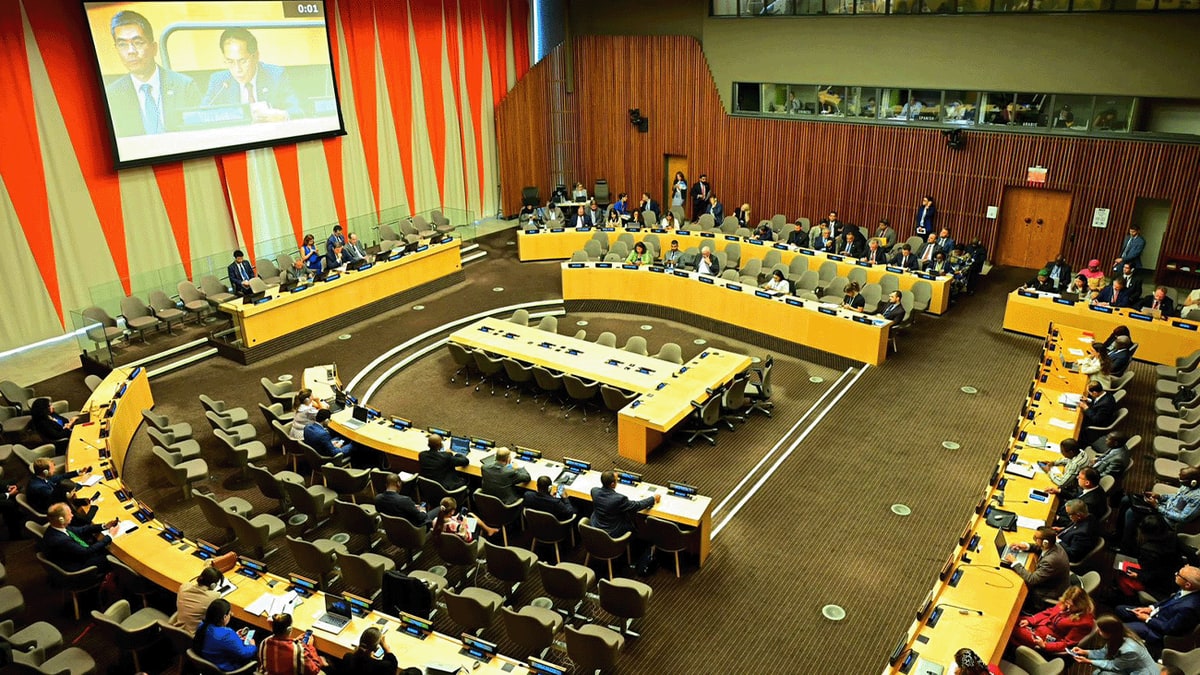
Pakistan has told the United Nations that AI weapons are not a future problem but a present one, and that “the decision to employ nuclear weapons must always remain in human hands.” Counsellor Husham Ahmed, from Pakistan’s mission to the UN in Geneva, made the case in the General Assembly’s First Committee, which deals with disarmament and security, the state news agency APP reported on Sunday, 25 October, and The Nation carried the story on Monday.
What Pakistan said
Ahmed’s warning was that AI systems working “without effective human judgement and control” increase the risk of miscalculation and escalation, “lower the threshold for the use of force, and erode compliance with international humanitarian law.” He said AI-enabled targeting and decision-support tools are “already being deployed at scale in active global conflicts.”
The sharpest line was about South Asia, though he named no country. The dangers are “acute in regions of close conventional-nuclear entanglement,” he said, pointing to a case “where one nuclear-armed State has deployed autonomous loitering munitions and dual-capable missiles against another.”
His ask was about who writes the rules. “Military AI governance must be anchored in the UN,” he said, adding that initiatives outside the UN “cannot replace its legitimacy, inclusivity, and universality.”
Reading between the lines
Pakistan has made this argument before, more directly. In September 2025, Defence Minister Khawaja Asif told a UN Security Council debate on AI that a recent military exchange between India and Pakistan, involving autonomous munitions and high-speed cruise missiles, showed the danger, Arab News reported then. He called for banning AI uses that lack “meaningful human control.” UN Secretary-General Antonio Guterres has called for a ban on lethal autonomous weapons without human control by 2026.
The line about initiatives outside the UN is also pointed. Several US-led and Western groupings have produced their own declarations on responsible military AI. Pakistan’s position is that rules made by a club of tech powers, without the countries most exposed to their use, will not carry weight.
Our take
Pakistan’s case is strongest on the nuclear point. In a region where two nuclear-armed neighbours have exchanged drones and missiles, anything that shrinks decision time from hours to minutes is dangerous, and keeping a human in charge of nuclear launch decisions should be the easiest thing in the world to agree on. It isn’t yet written into any treaty.
The harder part is that Pakistan, like every military, is also buying and building drones and AI tools. Calls for UN rules carry more weight when a country is open about its own systems and the limits it sets on them. Watch the First Committee votes later this autumn on resolutions about autonomous weapons, and where Pakistan, India, the US and China land.
Sources
This story was researched and drafted with AI assistance, then checked and edited by our editor before publishing.