Oruc Reis in Karachi: Turkey starts oil and gas search, drilling in 2027
Turkey's survey ship Oruc Reis has reached Karachi to map oil and gas off Sindh and Makran. What it will survey, who is involved and when drilling could start.
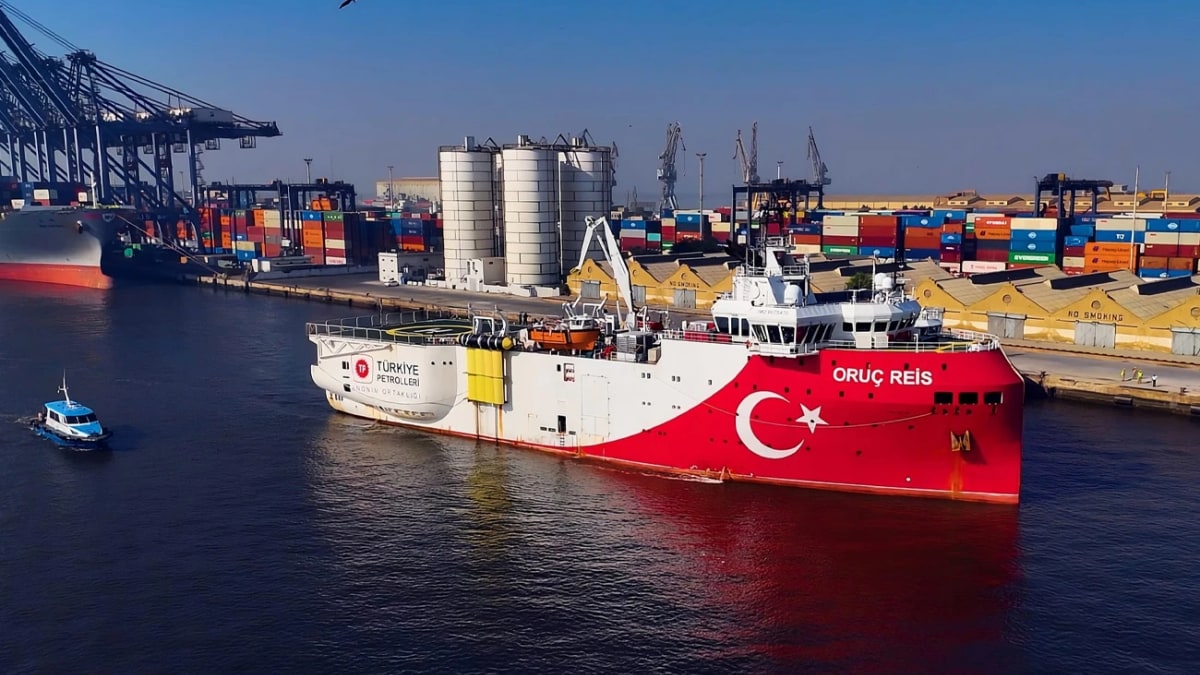
Turkey’s seismic research ship Oruç Reis has docked at Karachi Port to start mapping Pakistan’s seabed for oil and gas, and Turkish Energy Minister Alparslan Bayraktar says drilling could follow in 2027. “We are now beginning hydrocarbon exploration in Pakistan’s offshore areas,” Bayraktar said as the ship arrived after a 19-day voyage.
Deputy Prime Minister Ishaq Dar, Bayraktar and Petroleum Minister Ali Pervaiz Malik welcomed the ship at a ceremony at Karachi Port on Friday, 20 November, where several energy cooperation agreements were also signed.
What will Oruc Reis survey?
According to Turkey’s energy ministry, the work comes in two parts:
- Indus-C block, off Karachi: a 3D seismic survey over about 670 square kilometres, taking around 50 days once the ship reaches the area.
- Makran blocks, off Balochistan: after returning to Karachi, a 2D survey along 2,353 kilometres of lines, taking about 25 days.
Seismic surveys send sound waves into the seabed and record the echoes. They do not find oil by themselves; they show which rock structures might hold it, so companies can decide where a well is worth the money. Turkish Petroleum Corporation (TPAO) will collect the data.
Who is involved?
Pakistan auctioned 23 offshore exploration blocks last year, its first offshore round in nearly two decades. TPAO took a 25% stake and the operator’s role in one block off Karachi. It also signed exploration and production agreements with Pakistani companies, including OGDCL, PPL, Mari Energies, Fatima, Prime and GHDL, covering three offshore and two onshore fields. Licensing for five blocks is complete, according to the ceremony’s organisers.
The plan is late. Bayraktar said last month that operations off Pakistan had been delayed by about six months because of the war in Iran.
Will Pakistan find oil?
Nobody can promise that, and officials were careful not to. Dar said seismic surveys cannot guarantee commercially viable discoveries but are essential to find out what is there. “Today, Pakistan is taking this step with confidence, responsibility and prayers,” he said, adding that “our seas are an economic asset, but they are also a national trust” and must be protected while being developed.
Pakistan has been here before. Its last major offshore well, drilled in 2019 off Karachi after months of national excitement, found nothing commercially viable. That is worth remembering before anyone shares a “Pakistan strikes oil” video.
Why it matters for petrol prices
Pakistan imports most of its crude oil, petrol, diesel and LNG, which is why fuel prices here follow the Gulf and the dollar so closely, and why the Iran war and Houthi attacks on Saudi Arabia keep showing up in our petrol bill. A real offshore find would take years to bring into production even in the best case, so it will not change pump prices soon. But the survey is the first step that has been missing for years, and with Turkey sharing the cost and risk, Pakistan pays less to find out.
Petroleum Minister Ali Pervaiz Malik said the ship’s arrival turns signed agreements into practical work. The next milestone is the end of the Indus-C survey, roughly two months from now, when the data will show whether a drilling site is worth choosing for 2027.