Justice Mohsin Akhtar Kayani resigns from LHC, says executive now controls judges' transfers
In his letter the LHC judge blamed the 26th and 27th amendments and executive control over judges. What he wrote, why he was moved and what comes next.
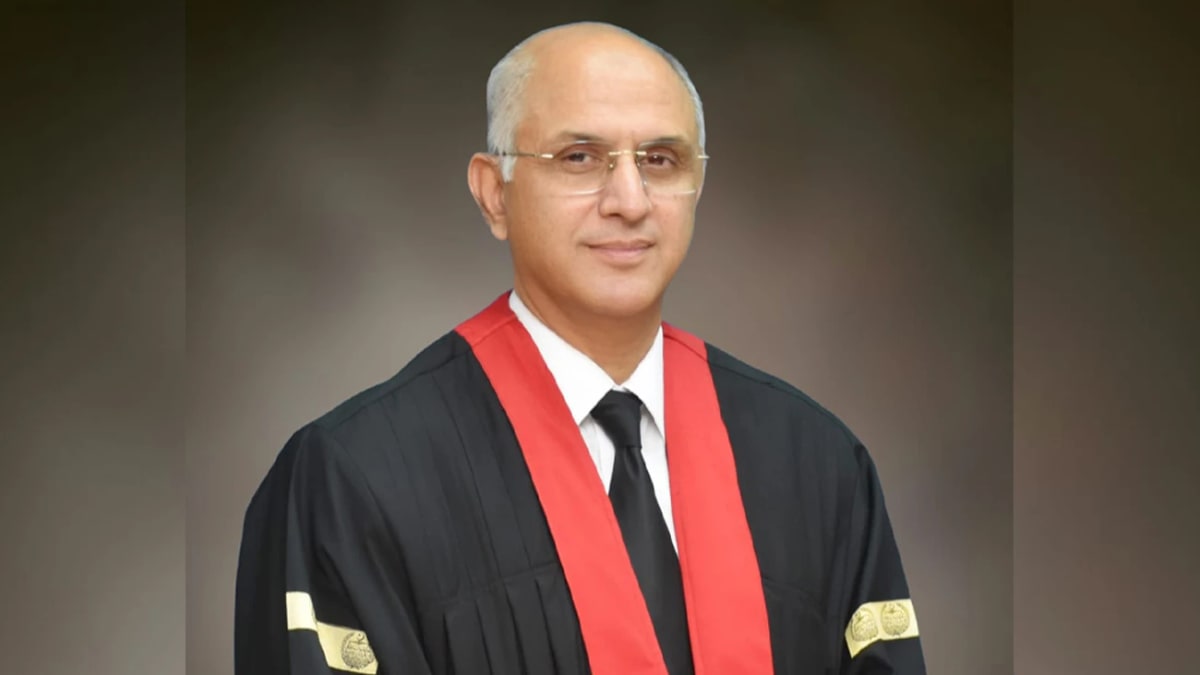
Justice Mohsin Akhtar Kayani stepped down from the Lahore High Court on Wednesday, 28 October 2026. In a resignation letter addressed to President Asif Ali Zardari, he said the 26th and 27th Constitutional Amendments “have compromised the independence and institutional integrity of the high courts” and that his conscience no longer allowed him to stay on the bench.
He is one of the best-known judges of his generation, mostly for his work on enforced disappearances at the Islamabad High Court, so the resignation landed hard in legal circles within hours.
What did Justice Kayani say in his letter?
Geo News, Arab News and The Express Tribune all saw the letter. In it, Justice Kayani gave two sets of reasons.
The first was personal: health concerns after a recent surgery.
The second was about the system. He wrote that he had watched “the executive’s growing control over judicial institutions, extending to the appointment and transfer of judges,” and that this had seriously eroded public confidence in an independent judiciary. He also wrote about ordinary litigants, calling them the main stakeholders in the justice system, people “whose suffering continues to deepen.”
He called the decision painful, said he had disposed of more than 23,000 cases over his career, and said he would go back to practising law to help people protect their rights.
Why was he in Lahore and not Islamabad?
Justice Kayani was raised to the Islamabad High Court in December 2015 and spent almost his whole judicial career there. In April 2026 the Judicial Commission of Pakistan, chaired by Chief Justice Yahya Afridi, approved by majority vote his transfer to the LHC. Justice Babar Sattar was sent to the Peshawar High Court and Justice Saman Rafat Imtiaz to the Sindh High Court at the same time.
Those moves were possible because the 27th Amendment changed Article 200: a judge’s consent is no longer needed for a transfer between high courts, according to The Express Tribune.
All three were among the six IHC judges who in 2024 wrote to the Supreme Judicial Council about alleged interference by intelligence agencies in court work. In February 2025 five IHC judges, including these three, also objected to Justice Sardar Sarfraz Dogar becoming IHC chief justice after his transfer from Lahore.
At the LHC, Justice Kayani lost his seniority. The Express Tribune says he was tenth on the list; Arab News puts him 12th. Under the court’s new roster he had just been moved from the principal seat in Lahore to the Rawalpindi bench. He was not due to retire until 2032.
What happens now?
A high court judge’s resignation goes to the President and takes effect once accepted. By Wednesday evening there was no public response from the government, the Judicial Commission or the LHC.
The bigger question is whether others follow. Justices Babar Sattar and Saman Rafat Imtiaz were transferred under the same rules, and lawyers’ bodies have opposed the 27th Amendment since it passed in 2025. Watch for statements from the Pakistan Bar Council and the Supreme Court Bar Association in the next day or two.
Sources
This story was researched and drafted with AI assistance, then checked and edited by our editor before publishing.