DIY air purifier for smog: how a fan and 4 filters can clean a room's air
Lahore's air is hazardous. A fan taped to MERV 13 filters, the Corsi-Rosenthal box, cleans indoor air for far less than a purifier. How to build one.
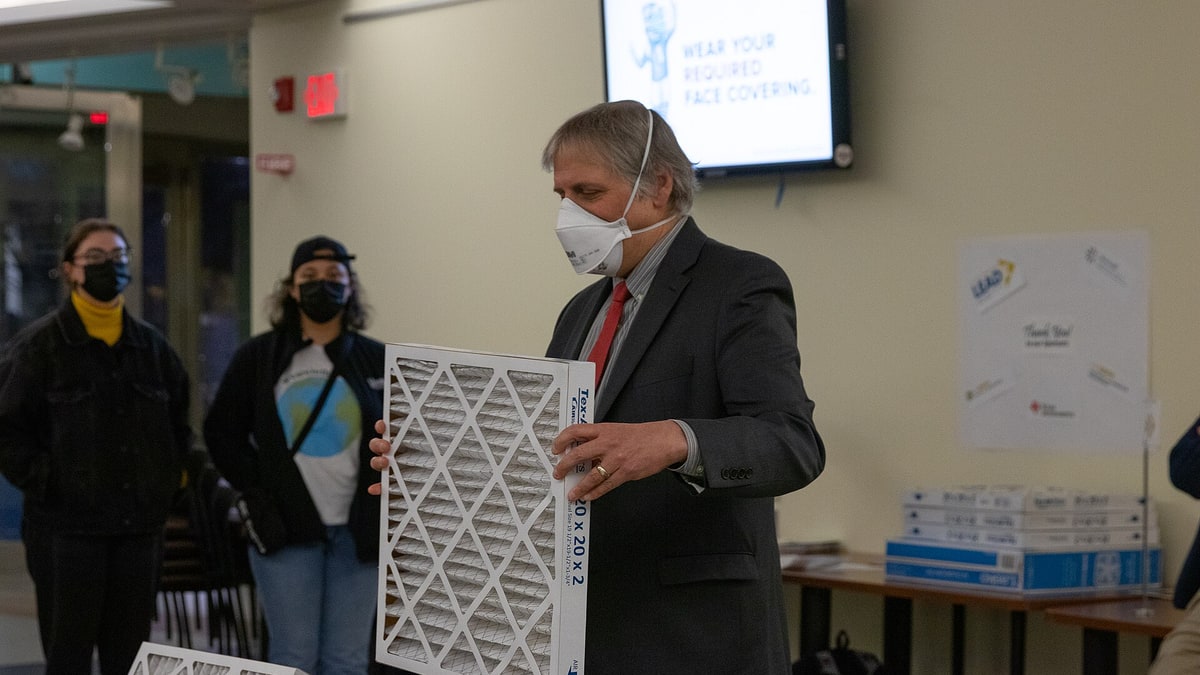
With Lahore topping world pollution charts again this week, plenty of families are asking the same question: is there a way to clean the air inside the house without paying for an expensive purifier? There is, and it has been tested by the US Environmental Protection Agency. A fan plus a few good air filters, taped together into a cube, can pull a surprising amount of smoke and fine dust out of a room.
It is called the Corsi-Rosenthal box, after the two American researchers who popularised it.
What you need
- A square box fan, ideally a newer one with a safety certification mark. The EPA’s tests used box fans made in 2012 or later with UL or ETL marks, which have fused plugs and thermal cut-offs.
- Four MERV 13 air filters, the pleated kind used in central air systems. US guidance uses 20 by 20 inch filters to match a standard box fan, so match the size to your fan.
- Strong tape (duct tape) and a piece of cardboard for the top.
How to build it
- Stand the four filters on their edges in a square, like the walls of a box, with the airflow arrows on each filter pointing inward.
- Tape the edges together firmly so there are no gaps.
- Place the fan on top, facing upward and outward, so it pulls air through the four filters and blows it out the top.
- Tape the fan to the filters all round.
- Cut a cardboard ring (a shroud) to cover the corners of the fan that sit outside its round blades, so air cannot sneak back in. The EPA found this one free step raised performance by about 40%.
Does it really work?
In EPA lab tests on smoke, a box fan with one ordinary MERV 13 filter delivered a clean air rate (CADR) of 111. The four-filter cube with a shroud reached 401, more than three and a half times better. Researchers at the University of Connecticut measured a five-panel version at roughly 600 to 850 cubic feet of clean air per minute depending on fan speed, which is in the range of many shop-bought purifiers.
A HEPA purifier still traps more of the very finest particles per pass. The DIY box makes up for it by moving a lot more air. The EPA says it works in the lab and that real-world results are still being studied, so think of it as a strong extra tool, not a medical device.
Safety first
The EPA’s partner UL ran five box fans with clogged filters and even with both sides blocked for seven hours, and none caught fire. Even so, the EPA’s advice is clear:
- Use a newer, certified fan. Do not leave an old or uncertified fan running unattended or overnight.
- No extension cords or damaged fans, and keep children away from it.
- Keep a working smoke detector in the house.
Change the filters often
This is the part people skip. The EPA found that dirty filters made DIY cleaners “almost completely ineffective”. In heavy smog, check them every day and change them when they turn dark grey or brown, or smell smoky.
For the bigger picture on today’s air quality in Lahore, see our Lahore AQI story. Keep the room’s doors and windows closed while the box runs, or you will just be filtering the street.
Sources
This story was researched and drafted with AI assistance, then checked and edited by our editor before publishing.